Garage Door Spring Replacement & Repair in San Francisco
Same-Day Torsion & Extension Springs | CA Lic. #1160787 (C-61/D-28)
A broken garage door spring makes the door feel extremely heavy and usually stops it from opening, often after a loud bang from the garage. Bay Bridge replaces torsion and extension springs same-day across the Bay Area, matched to your door's exact weight and cycle rating. We also rebalance worn springs and convert extension systems to torsion.
What changes the price?
The usual jobs for this problem are below. Which one your door needs, and the size and weight of the door, set the price.
- Spring rebalance / adjustment
- Single torsion spring, installed
- Pair of torsion springs, installed
- Extension springs (pair), installed
- High-cycle spring upgrade
- Extension-to-torsion conversion
The technician gives you the price before any work starts. Call (415) 650-4823 or book online for an exact quote.
Expert Garage Door Spring Repair in San Francisco & the Bay Area
Is your garage door heavy, stuck, or making loud noises? You may have a broken garage door spring. Springs do all the heavy lifting — literally — counterbalancing hundreds of pounds of door weight every time you open and close your garage. When a spring snaps or weakens, the door becomes dangerous and unusable.
At Bay Bridge Garage Door, we replace broken garage door springs the same day, and the technician tells you the price before any work starts. Our experienced technicians have the knowledge and tools to diagnose and fix any spring problem on the spot, so you're not stuck waiting for parts or a callback.
We serve homes and businesses across San Francisco, Daly City, San Mateo, Oakland, Fremont, and the surrounding Bay Area. If your spring just broke, don't try to force the door open — call us and we'll take care of it safely.
What Is the Importance of a Garage Door Spring?
A malfunctioning garage door spring can cause a range of problems — from a sluggish door to a complete breakdown. These vital components work tirelessly, lifting and lowering your heavy garage door more than a thousand times a year. Over time, they wear out, weaken, or even snap, creating a frustrating and potentially dangerous situation.
A broken garage door spring can leave your door inoperable, compromising your home's security and convenience. It's important to address this issue promptly to avoid further damage and potential accidents. Operating a door with a failing spring puts extra stress on the opener, cables, and tracks — turning a straightforward spring replacement into a much bigger repair bill.
At Bay Bridge Garage Door, our technicians have the expertise to diagnose and repair a wide range of spring issues. We understand the inconvenience a broken garage door causes — that's why we offer reliable garage door spring repair in San Francisco with minimal disruption to your daily routine.
Common Signs Your Garage Door Springs Need Repair
Catching spring problems early saves you money and keeps your family safe. If your garage door is showing any of these signs, call Bay Bridge Garage Door for quick and reliable spring repair in San Francisco.
Broken Spring
You can see a visible gap or break in the spring itself, usually above the door near the header. If you heard a loud bang from the garage — like a firecracker — that's the classic sound of a torsion spring snapping.
Door Feels Heavy or Hard to Lift
When springs lose tension or break, the full weight of the door falls on you or the opener. A properly balanced door should lift easily with one hand. If it feels like you're deadlifting, your springs are failing.
Door Drops Fast When Closing
Instead of lowering smoothly and controlled, the door falls suddenly. This means the springs can no longer counterbalance the weight — a serious safety hazard, especially in homes with kids or pets.
Crooked or Tilting Door
One side of the door goes up or down faster than the other. This often happens when one spring in a two-spring system breaks, leaving the other side unsupported. Operating the door in this condition can damage the tracks and rollers.
Strange Noises
Grinding, squeaking, or popping sounds when the door moves usually mean the springs are worn, corroded, or binding. Coastal fog and salt air in neighborhoods like the Sunset and Richmond speed up rust on spring coils.
Needs Constant Adjusting
If you find yourself repeatedly adjusting the door or opener settings to keep things working, the real culprit is usually failing springs that can no longer hold proper tension.
Visible Rust, Gaps, or Wear
Look for rust, stretched-out coils, or gaps between spring windings. Any of these indicate the spring is deteriorating from the inside out and could snap without much warning.
Door Won't Open or Close
Your garage door doesn't respond when you press the button, or the opener motor runs but the door barely moves. When springs fail completely, the opener simply can't lift the unassisted weight of the door.
Loose or Dangling Cables
The lift cables run off the spring system. When a spring breaks, the cables lose tension and can hang loose or unwind from their drums. Leave them alone and stop using the door.
What to Do Right Now If a Spring Breaks
A broken spring is not a do-it-yourself repair. Springs are wound with hundreds of pounds of force, and without them the door is too heavy to lift safely. Follow these steps in order:
- Stop using the door. Do not press the wall button or the remote. Without the spring the opener can only move the door a few inches, and trying can burn out the motor or drop the door.
- Disconnect the opener. Pull the red emergency release cord so nobody runs the opener by accident.
- Do not lift the door by hand. Without the spring it can weigh 150 to 400 pounds and can come down hard.
- Clear the area. Keep people, pets and cars away from the door until it is fixed. From a safe distance you can look for a gap in the spring coil or loose cables.
- Call a professional. Call (415) 650-4823 for same-day broken spring replacement in San Francisco and across the Bay Area.
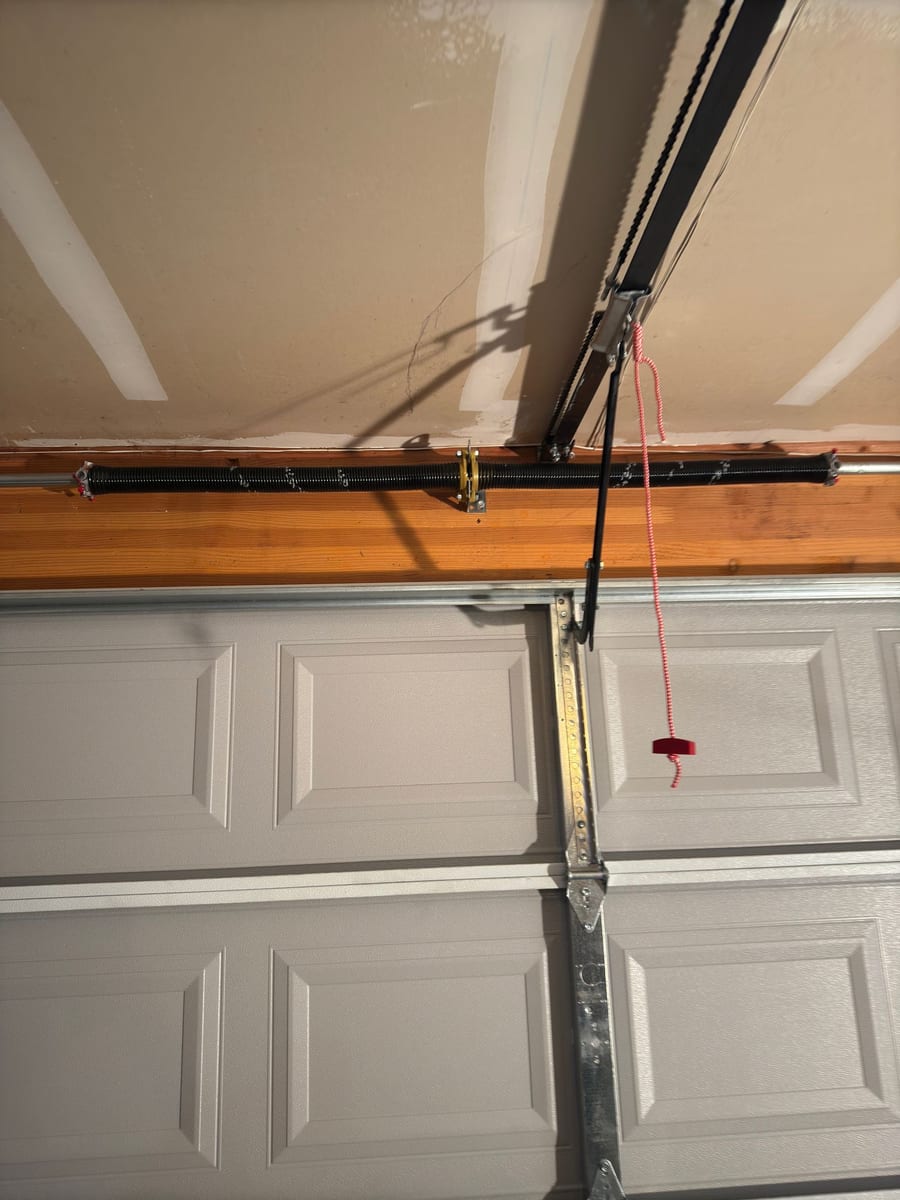
Our Spring Repair Process
At Bay Bridge Garage Door, we make fixing your springs simple and stress-free.
- Thorough inspection. We check your springs carefully to see exactly what's wrong — the spring type, condition, and whether other components were damaged when the spring failed.
- Clear explanation and pricing. We show you what failed and tell you the price before any work starts.
- Professional replacement. We size the new springs to your door's weight and height: wire size, inside diameter and length. Our team removes the broken springs and installs new ones, making sure they're wound to the correct tension and aligned for smooth operation.
- Full system test. After installation, we test the door through several open-close cycles, check the balance, and verify the opener and safety sensors are working properly.
- Maintenance tips. We share easy tips to help you take care of your springs and catch problems early next time.
How Long Does Spring Replacement Take?
Once the technician is at the door, most spring jobs take one to two hours, including the safety check and the balance test at the end. Our trucks carry the common torsion and extension springs, so most doors are finished on the same visit.
- Single torsion spring: about 45 minutes to 1 hour
- Pair of torsion springs: about 1 to 1.5 hours
- Pair of extension springs: about 1 hour
- Heavy-duty or commercial springs: 1.5 to 3 hours
Torsion vs. Extension Springs
Understanding which type of spring your garage door uses helps you communicate with your technician and make informed decisions about replacements.
| Feature | Torsion Springs | Extension Springs |
|---|---|---|
| Location | Mounted on a shaft above the door opening | Mounted on either side of the door, along the horizontal tracks |
| How they work | Twist (torque) to lift the door | Stretch and contract to lift the door |
| Typical lifespan | 15,000 – 20,000 cycles (7 – 12 years) | 10,000 cycles (5 – 8 years) |
| Safety | Contained on shaft — safer when they break | Can fly off if safety cables aren't installed |
| Cost | Higher upfront, but longer lasting | Lower upfront, but shorter lifespan |
| Best for | Heavy doors, double-car garages, daily use | Lighter single-car doors, lower headroom situations |
Most San Francisco homes built in the last 20 years use torsion springs. If your home has extension springs and you're replacing them, we often recommend upgrading to torsion — the longer life and improved safety are well worth it. Learn more in our detailed torsion vs. extension spring guide.
Spring Replacement in San Francisco, the East Bay, the Peninsula and Marin
San Francisco
Many spring calls in the city come from the Sunset, the Richmond, Parkside and the Excelsior, where row houses have a single tuck-under garage below the living room. Those doors usually run one torsion spring on a short shaft, often with little headroom, and the fog and salt air near Ocean Beach rust the coils faster than inland. Some older homes still have extension springs on the sides; we replace them as a pair with safety cables, or convert the door to torsion if there is room above it. See our San Francisco garage door repair page for the rest of what we fix in the city.
East Bay
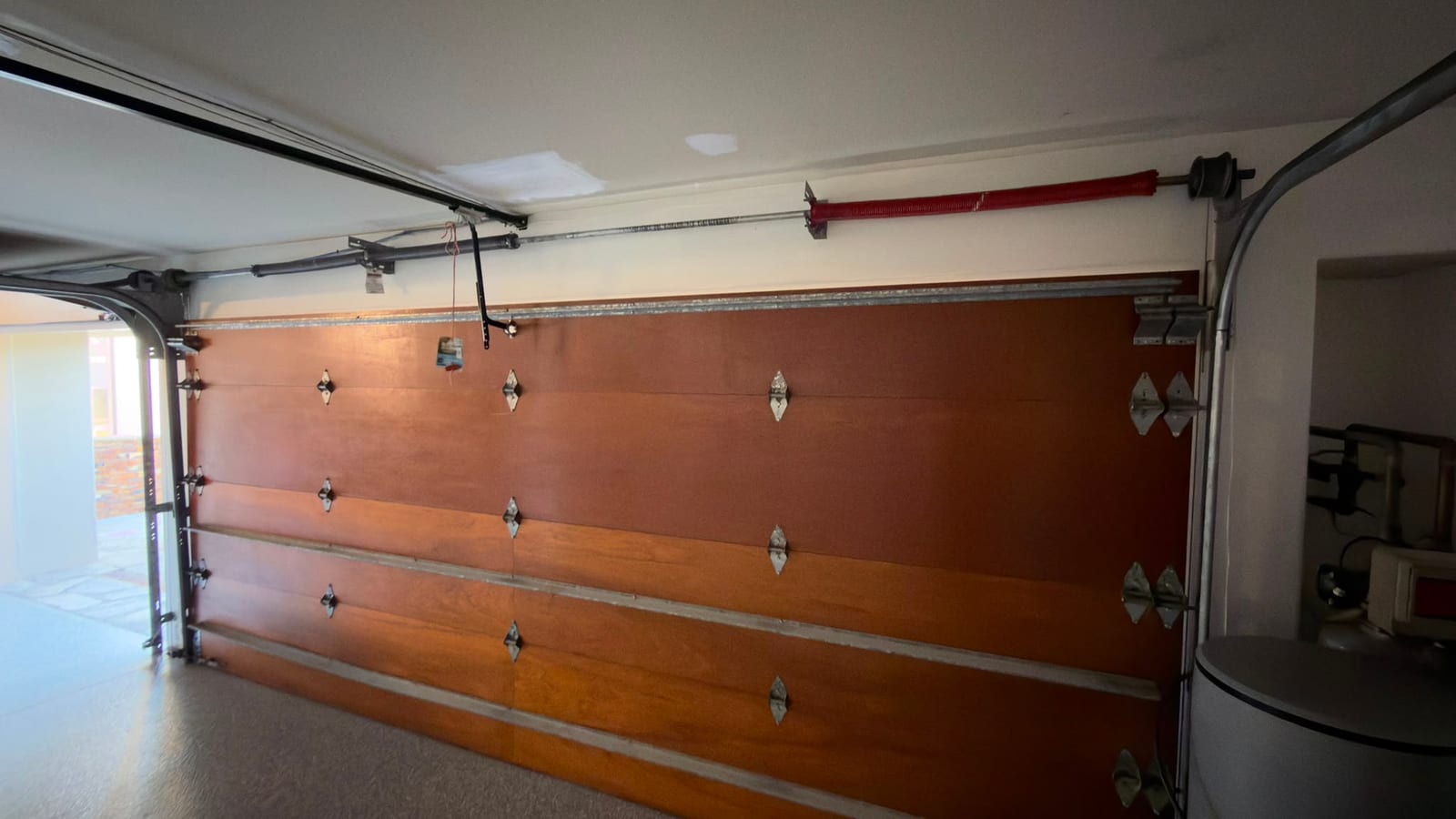
In Oakland, Berkeley and Alameda many older houses have heavy wood and carriage-house doors. A heavier door needs a heavier spring, so we weigh the door before we wind new ones. Hillside garages often have sloped floors that pull a door out of balance; we level the door first, then set the spring tension. We also cover Fremont and Walnut Creek.
Peninsula and Marin
On the Peninsula, double-car steel doors in Daly City, South San Francisco, San Mateo, Redwood City and Palo Alto usually run two torsion springs, and we replace both when one breaks. In Marin, from Sausalito and Mill Valley to San Rafael, damp air and wood doors are common, so we check the cables and drums for rust while the springs are off.
Commercial doors
Shops and warehouses run their doors many times a day, so a standard 10,000-cycle spring wears out fast. On commercial doors we fit high-cycle springs rated for 25,000 cycles or more, sized to the door and how often it runs.
Why Choose Bay Bridge Garage Door?
Springs Sized to Your Door
We measure the door and the old spring (wire size, inside diameter, length and wind direction) and match the new springs to the door's weight.
Fast & Reliable Service
We offer same-day garage door spring replacement when you need it most — including weekends and evenings for emergencies.
Licensed Technicians: CA Lic. #1160787 (C-61/D-28)
Trust our licensed team for safe spring repairs. We follow DASMA safety guidelines on every job. CA Lic. #1160787 (C-61/D-28).
High-Cycle Springs on Request
Standard springs are rated around 10,000 cycles. If you use the door a lot, ask for high-cycle springs rated for 25,000 cycles or more.
24/7 Emergency Repairs
Spring broke at 6 AM before work? We provide 24/7 emergency garage door spring repair so you're not stranded.
Price Before Work
The technician tells you the price for parts and labor before any work starts.
How to Make New Springs Last
Springs wear out by cycles, one open and one close. Standard springs are rated around 10,000 cycles and high-cycle springs 25,000 or more. A few habits keep them from failing early:
- Get a yearly check. A safety inspection catches a stretched or rusting coil before it snaps.
- Keep the springs lubricated. A light coat of garage door lubricant cuts friction and slows rust, which matters in foggy, salty neighborhoods.
- Keep weight off the door. Anything hung on the door makes the springs work harder.
- Run full cycles. Avoid slamming the door or leaving it stuck halfway.
- Replace both springs together. On a two-spring door, the second spring is the same age as the one that broke.
Spring Repair Service Throughout the Bay Area
We replace garage door springs for homes and businesses across San Francisco, the East Bay, the Peninsula and Marin.
Garage Door Spring Repair FAQ
How long do garage door springs last?
Most garage door springs last about 7 to 15 years, depending on how often you use your door and which type of spring you have. Torsion springs typically outlast extension springs. Regular maintenance and lubrication can help them reach the upper end of that range. In coastal Bay Area neighborhoods where fog and salt air accelerate rust, springs may wear out sooner.
What should I do if my garage door spring breaks?
Stop using the door immediately — don't try to open or close it manually or with the opener. A door with a broken spring is extremely heavy and can crash down unpredictably. Disconnect the opener by pulling the red emergency release handle, keep everyone away from the door, and call a professional. Bay Bridge Garage Door offers same-day emergency service at (415) 650-4823.
How much does it cost to replace garage door springs in San Francisco?
The price depends on whether one spring or both are replaced, the spring type (torsion or extension) and cycle rating, the size and weight of the door, and whether the cables and drums are worn too. The technician tells you the exact price at the door before any work starts.
Can I replace one spring if the other is still good?
We strongly recommend replacing both springs at the same time, even if only one has broken. Both springs have endured the same number of cycles and wear. If one has failed, the other is typically not far behind. Replacing both keeps the door balanced, prevents a second visit, and is safer overall.
What are the differences between torsion and extension springs?
Torsion springs mount on a shaft above the door and lift by twisting. Extension springs run along the horizontal tracks on either side and stretch to lift the door. Torsion springs last longer, operate more smoothly, and are safer when they break. Most modern garage doors in the Bay Area use torsion springs. See our full comparison guide for details.
How do I know if my garage door spring is broken?
The clearest sign is a loud bang from the garage. After that the door feels extremely heavy, will not open or only lifts a few inches, or hangs crooked. From a safe distance, a 2 to 3 inch gap in the torsion spring coil above the door means it has snapped.
Can I open my garage door with a broken spring?
We advise against it. Without the spring you are lifting 150 to 400 pounds of dead weight, and running the opener can burn out the motor or let the door crash down. If you need your car out, call (415) 650-4823 for same-day service.
How long does it take to replace a broken garage door spring?
Most replacements take 45 minutes to 1.5 hours once the technician is at the door. Our trucks carry the common spring sizes, so most doors are fixed on the same visit, followed by a safety check and a balance test.
Why did my garage door spring break?
Springs wear out by cycles. Standard springs last about 10,000 cycles, roughly 7 to 10 years for a home that uses the door 3 to 4 times a day. Coastal fog and salt air, missing lubrication, rust and a spring sized wrong for the door all shorten that.
Do you replace garage door springs in the East Bay and Marin?
Yes. Besides San Francisco and the Peninsula, we replace springs in Oakland, Berkeley, Alameda, Fremont and Walnut Creek, and in Marin from Sausalito and Mill Valley to San Rafael. Call (415) 650-4823 and we will tell you when a technician can be there.
Do you replace springs on commercial garage doors?
Yes. We replace torsion springs on commercial sectional doors and roll-up doors, usually with high-cycle springs rated for 25,000 cycles or more because commercial doors open many times a day.
Should I switch from extension springs to torsion springs?
Often, yes. Torsion springs last longer, run the door more smoothly and stay on the shaft when they break. The switch needs room on the wall above the door; in a low tuck-under garage we may keep extension springs and add safety cables instead.
Get Fast, Safe Spring Repair Today
A broken garage door spring demands immediate professional attention. Don't risk injury or additional damage by forcing the door open or trying a DIY fix — garage door springs are under extreme tension and are one of the most dangerous components to work on without proper training.
Bay Bridge Garage Door provides same-day spring replacement throughout San Francisco and the Bay Area. Our trucks carry a full inventory of torsion and extension springs in various sizes, so most repairs are completed in a single visit — usually in under two hours.
Whether you have a residential or commercial garage door, we have the expertise and parts to get your door working safely again. Call us now for emergency service or schedule a convenient appointment.